


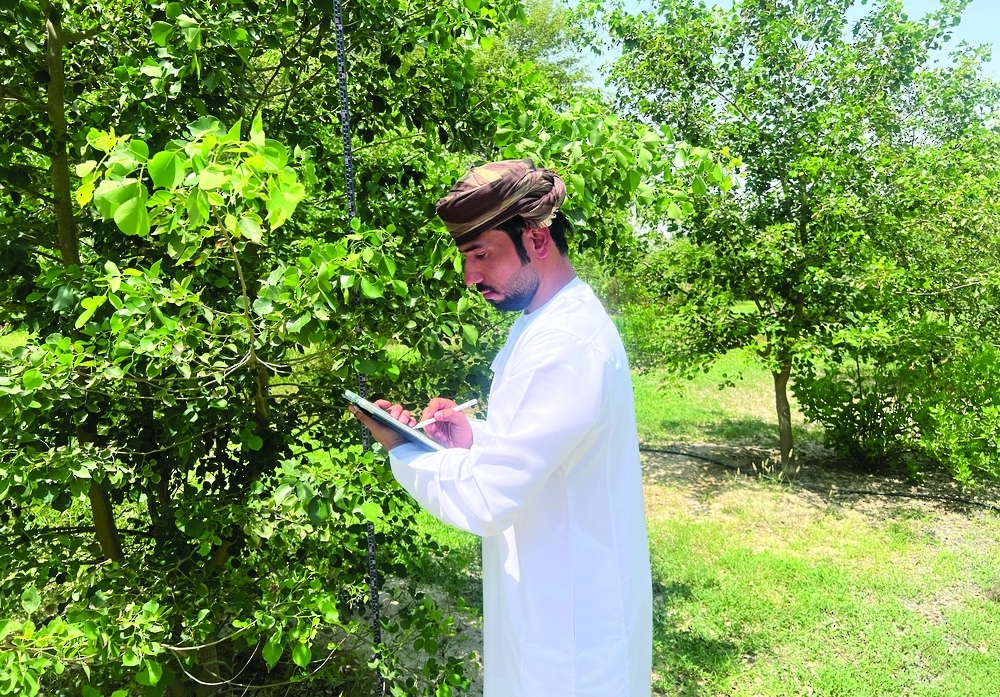





SUHAR: The hackberry tree, a rare and long-lived species in Oman, is gaining increasing scientific attention for its environmental and economic value, reinforcing efforts towards sustainability.
Scientifically known as Dalbergia sissoo — also referred to as sissoo, sheesham or Indian rosewood — the tree originates from the Indian subcontinent and has spread across parts of East Asia, Africa, Australia and the Americas.
Eng Ahmed bin Khamis bin Ali al Hamdi, an agricultural researcher at the Department of Agricultural Research in Al Batinah North, said the tree remains relatively rare in Oman, with concentrations in mountain villages such as Wadi Al Sahtan, Wadi Al Nakhr in the Wilayat of Al Hamra, and Wadi Bani Ghafir in an area locally known as ‘Al Mays’.
Al Hamdi noted that the tree is prized for its durable, high-quality wood, historically used in furniture-making as well as for crafting sword and knife handles and firearm stocks.
He highlighted its role in forestry systems, soil conservation and reforestation, citing its adaptability to diverse climatic and soil conditions and its rapid growth rate.
Studies indicate that a mature hackberry tree can absorb around 22 kilogrammes of carbon annually. Under optimal conditions, planting 10 acres with approximately 140 trees per acre could absorb up to 30 tonnes of carbon each year.
Wood productivity varies depending on factors such as age, soil and climate, but estimates suggest yields of 10–15 cubic metres per hectare annually under proper management.
Al Hamdi added that the General-Directorate of Agricultural and Animal Research is actively studying the species, focusing on propagation, salinity tolerance, water consumption and growth rates — reaching up to three metres annually — as well as its potential in reforestation and carbon capture initiatives.
These efforts aim to support decision-makers and farmers in selecting suitable plant species, contributing to both environmental sustainability and economic development in Oman. – ONA
Oman Observer is now on the WhatsApp channel. Click here


